
Nutramax Dasuquin with MSM Review
A veterinarian-recommended joint supplement providing advanced support for active and aging dogs.
Updated January 6, 2026
By Alex Harper
Nutramax Dasuquin with MSM
Product Overview
Dasuquin with MSM delivers exceptional joint support using a scientifically backed formula featuring ASU. While the premium cost and frustration with packaging durability are valid concerns, the strict quality control and documented efficacy make it a reliable, top-tier choice for maintaining canine mobility and comfort long term.
Key Benefits
Pros
Cons
Bottom line
This supplement sets the gold standard for joint health with its research-backed ingredients and rigorous testing. Despite the high price tag, the long-term benefits for mobility make it a worthwhile investment for aging or active dogs requiring reliable, safe, and effective structural support for daily comfort.
Reviews are independent and based on our own research and judgment, but if you buy through links on this page, we may earn a small commission that helps keep our site free.

Let’s Get Started
As our canine companions age, seeing them struggle to stand up or hesitate to jump on the couch is heartbreaking. Joint health remains one of the most common concerns for pet owners, driving a massive market of supplements that range from highly effective to completely useless. Navigating this crowded selection can be overwhelming, especially when every bottle promises to restore puppy-like mobility.
In the world of veterinary nutraceuticals, few names carry as much weight as Nutramax. Their flagship product, Nutramax Dasuquin with MSM, is widely regarded by veterinarians as a top-tier option for supporting joint comfort and mobility. This comprehensive review analyzes the science and real-world performance to determine if Dasuquin truly deserves its reputation and premium price tag.
Product Overview
Dasuquin with MSM is a comprehensive joint health supplement designed to support cartilage structure and comfort in dogs. It is manufactured by Nutramax Laboratories Veterinary Sciences, a company that has established itself as a leader in research-driven animal health products. This formulation is an evolution of their original Cosequin line, which set the standard for glucosamine and chondroitin supplements decades ago.
The “Dasuquin” difference lies in its proprietary blend of ingredients. While it retains the high-quality glucosamine and chondroitin found in Cosequin, it adds Avocado/Soybean Unsaponifiables (ASU). This ingredient is a specific oil fraction shown to help protect cartilage, while the added methylsulfonylmethane (MSM) provides a multi-modal approach to joint health.
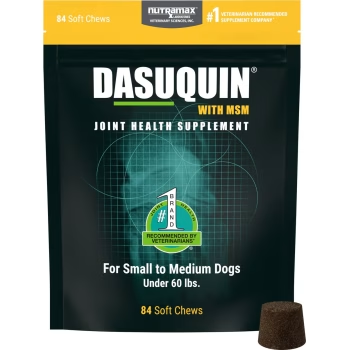
The product typically comes in the form of soft chews, though chewable tablets are also available. It is marketed not just as a reactive measure for stiffness, but also as a proactive support system for active dogs and large breeds predisposed to joint issues.
Key Benefits
Here’s a quick look at the main advantages Nutramax Dasuquin with MSM claims to offer:
Comprehensive Joint Support: This formula combines multiple active ingredients to support cartilage production and inhibit breakdown, providing a multi-pronged approach to joint health [1].
Enhanced Comfort: The inclusion of MSM helps support a normal inflammatory response, which is critical for maintaining physical comfort during daily activities like walking and playing.
- Cartilage Protection: The addition of ASU helps protect cartilage against degeneration, offering a mechanism of action that goes beyond simple nutrient replenishment.
- Verified Quality: The product carries the NASC Quality Seal, which provides independent assurance that the manufacturing process meets rigorous quality and labeling standards [9].
- Optimized Absorption: It utilizes trademarked, low-molecular-weight ingredients designed specifically to improve bioavailability in the canine digestive system.
Ingredient Analysis
The efficacy of any supplement relies entirely on the dosage and quality of its active components. Below is a detailed breakdown of the key ingredients found in the Nutramax Dasuquin with MSM formula:
- Glucosamine Hydrochloride: This amino sugar acts as a fundamental building block for cartilage repair. While widely used, a review in the Open Veterinary Journal notes that the oral bioavailability of generic glucosamine in dogs can be quite low [6]. Nutramax addresses this by using their proprietary FCHG49® Glucosamine, which is manufactured to specific purity standards to maximize uptake.
- Sodium Chondroitin Sulfate: Chondroitin works to maintain fluid within the joint, providing necessary shock absorption and lubrication. The specific form used here is TRH122® Sodium Chondroitin Sulfate. This low-molecular-weight version is critical because larger molecules are difficult for the digestive tract to absorb effectively.
- Avocado/Soybean Unsaponifiables (ASU): This is the standout ingredient that differentiates Dasuquin from competitors. Research published in Arthritis Research & Therapy indicates that ASU helps inhibit the expression of cartilage-degrading enzymes like MMP-13 [2]. By blocking these enzymes, ASU helps prevent the structural breakdown of the joint matrix.
- The combination of these ingredients is not accidental. A 2024 review in Frontiers in Veterinary Science suggests that ASU offers significant promise in alleviating osteoarthritis symptoms, potentially reducing the need for other interventions [5]. This scientific backing validates the ingredient selection as more than just a marketing list.
The combination of these ingredients is not accidental. A 2024 review in Frontiers in Veterinary Science suggests that ASU offers significant promise in alleviating osteoarthritis symptoms, potentially reducing the need for other interventions [5]. This scientific backing validates the ingredient selection as more than just a marketing list.
How It Works
Dasuquin works by attempting to modify the underlying process of joint degradation rather than simply masking pain signals. In a healthy joint, there is a balance between the breakdown of old cartilage and the production of new cartilage. In dogs with osteoarthritis or age-related stiffness, this balance shifts toward cartilage loss.
The glucosamine and chondroitin in Dasuquin provide the raw materials needed to synthesize new cartilage matrix. Simultaneously, the ASU component works at a cellular level to inhibit the enzymes responsible for breaking down existing cartilage. This dual action aims to preserve joint function over the long term.
This product is primarily suited for aging pets showing early signs of slowing down, active working dogs requiring preventative support, and those recovering from orthopedic procedures. Surgeons frequently recommend it specifically for post-surgical cases, such as TPLO recovery, to support long-term joint health.
However, it is crucial to understand that Dasuquin is not a replacement for pharmaceutical pain relief in severe cases. A systematic review in the Journal of the American Veterinary Medical Association (JAVMA) highlighted that while nutraceuticals provide support, they do not offer the high level of acute pain relief seen with Non-Steroidal Anti-Inflammatory Drugs (NSAIDs) [4].
Safety and Side Effects
Dasuquin is generally considered safe for long-term use. However, pet owners should remember that just because something is “natural” does not mean it is risk-free. Even good ingredients can have side effects.
The most common side effect reported is mild stomach upset. This can show up as gas, soft stools, or occasional vomiting. Veterinary resources note that this often happens because new ingredients are added to the diet, especially during the first few weeks when the dose is higher.
There are specific safety concerns to watch for. According to VCA Animal Hospitals, MSM acts as a mild blood thinner [10]. Because of this, it is critical to check with your veterinarian before use, especially if your dog has bleeding problems or takes blood-thinning medication.
While very rare, problems from eating too much can happen. A report in the Canadian Veterinary Journal described liver and kidney failure in a dog that ate a large amount of joint supplements [8]. This reminds us to treat these tasty chews like medicine and keep the bag stored safely away from your pet.
Cost and Value
There is no denying that Dasuquin with MSM is one of the most expensive joint supplements on the market. The daily cost is significantly higher than generic glucosamine products found at big-box stores. However, value is determined by more than just the price tag.
The cost is justified by the rigorous quality control and the use of trademarked ingredients that verify you are getting the dosage listed on the label. Industry reports have indicated that a significant number of tested pet products fail to meet label claims, highlighting the risk of buying unverified supplements.
For owners seeking a preventative investment backed by manufacturing integrity, the higher price point offers significant value. Preventing or delaying the progression of arthritis can potentially save money on more expensive veterinary treatments, such as prescription pain medications or physical therapy, down the line.
Palatability and Administration
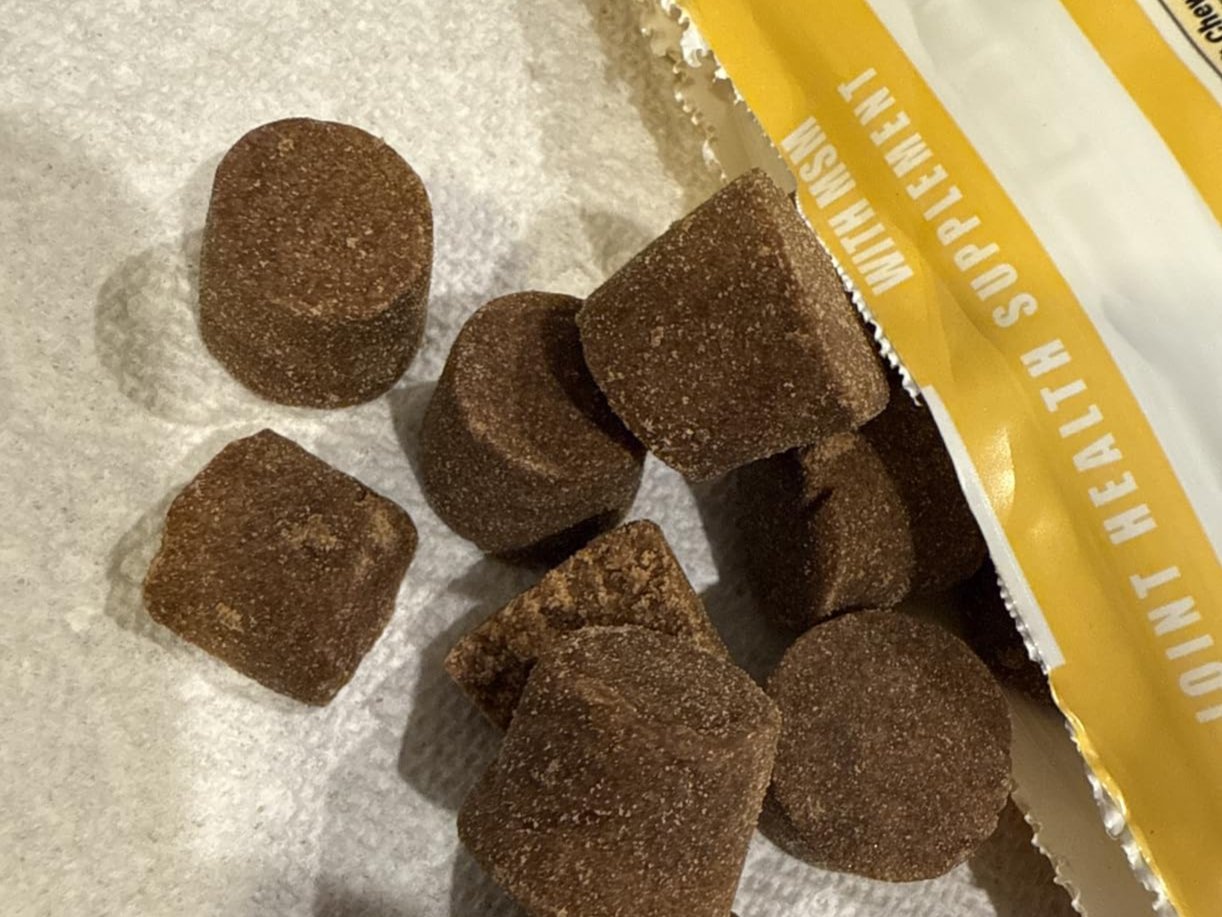
I tested these with my own dog, who usually eats anything but gets suspicious of vitamins. Opening the bag, the smell is strong. It is not a savory meat smell. It is definitely medicinal, like multivitamins mixed with broth.
The chews are large and much harder than I expected for a soft chew. They feel dense and dry. When I handed one over, my dog sniffed it for a while before taking it. He ate it, but he didn’t beg for more. It is definitely not a high-value treat for him.
I tried crumbling one over his food the next day. It was difficult to break apart because the square is so solid. You have to really pinch it to get it to crumble.
My biggest issue is the packaging. The zipper on the bag is terrible. The track ripped away from the side within a few days, so I can’t seal it anymore. I had to move everything to a plastic container. For the price, I expected a bag that stays closed.
Pros and Cons
Here’s a straightforward rundown of what’s great, and not so great, about this product:
Pros:
Cons:
User Experiences and Testimonials
Dog owners share many positive stories about how Dasuquin with MSM helps their older pets. Reviews often describe “game-changing” improvements, with dogs climbing stairs and playing fetch again. Many owners report that their pets seem years younger after using the chews.
However, these changes usually do not happen overnight. Most feedback matches the product labeling, which states that real results take a month or more to show up. This reinforces the need to be patient rather than expecting a quick fix.
There are some downsides, as picky eaters often refuse the chews unless they are hidden in cheese or peanut butter. A small group of dogs experience digestive upset like gas, which forces them to stop the supplement. Finally, many users are frustrated because the bag’s zipper breaks easily.
Bottom Line
Nutramax Dasuquin with MSM is a standout option in the crowded joint supplement market. It stands apart due to a scientifically sound formulation that goes beyond basic nutrition to actively protect cartilage structure. The inclusion of ASU and the rigorous quality control standards validated by the NASC Quality Seal provide a level of trust that generic competitors often lack.
While the price is high and the packaging is frustrating, the investment is justified for owners of large breeds, active dogs, or aging pets needing robust support. It is not a magic cure that works overnight, nor is it a replacement for pain medication in acute crises. However, as a long-term strategy for maintaining mobility and quality of life, it remains a leading benchmark against which other supplements are measured.
Product Rating
Here’s how Nutramax Dasuquin with MSM stacks up:
Frequently Asked Questions
Got questions? We have answers:
Sources
- Provides the official product specifications, ingredient list (including ASU and MSM), and manufacturer claims regarding the mechanism of action.
- Establishes the specific biological mechanism of Avocado/Soybean Unsaponifiables (ASU) in inhibiting cartilage-degrading enzymes like MMP-13 in canine models.
- Highlights the realistic timeline for efficacy, noting that significant changes often require a loading period and that objective force-plate data can differ from subjective owner reports.
- Provides the systematic review context comparing the efficacy of nutraceuticals to NSAIDs, supporting the claim that supplements are adjunctive rather than replacements for acute pain medication.
- A recent review confirming the potential of ASU to alleviate osteoarthritis symptoms and reduce reliance on NSAIDs, validating the ingredient’s inclusion in the formula.
- Discusses the low oral bioavailability of generic glucosamine in dogs, supporting the importance of Nutramax’s use of specific low-molecular-weight ingredients.
- A key clinical trial validating the efficacy of glucosamine/chondroitin formulations in treating canine osteoarthritis, supporting claims of improved mobility and pain reduction.
- Documents a rare case of toxicity from joint supplement overdose, providing a critical safety warning against the assumption that “natural” products are risk-free.
- Explains the rigorous testing and quality control standards required to display the NASC seal, serving as a key differentiator for trust and safety.
- Provides specific veterinary guidance on MSM, including its benefits for inflammation and critical safety information regarding its blood-thinning properties.
Nutramax Dasuquin with MSM
Ingredient Quality & Transparency
Effectiveness & Scientific Support
Trust & Brand Reputation
overall Rating
Methodology
Our review process is designed to give you confidence when choosing supplements for your dog. We follow four guiding principles: research-backed insights, ingredient transparency, practical guidance, and editorial independence. Every review is written with these standards in mind so you can make informed choices.
We start by gathering information from trusted sources, including scientific research, product labels, manufacturer details, and real customer feedback. This information is then distilled into clear, easy-to-understand insights that highlight a supplement’s ingredients, potential benefits, and possible drawbacks. Our ratings reflect ingredient quality, evidence of effectiveness, and the reputation of the brand.
Integrity is at the core of what we do. We never accept money, gifts, or free samples in exchange for favorable reviews. Some links on our site may earn us a referral fee from retailers such as Chewy or Amazon, but this never affects our evaluations. Affiliate commissions simply help cover the cost of keeping our reviews free and accessible.
Our goal is simple: to provide straightforward, trustworthy information that helps you confidently select the right supplements for your dog’s health and well-being.
To learn more, please visit our Review Methodology and Disclaimers and Disclosures pages.