
Dog Supplements: A Science-Backed Guide to Types & Benefits
As a dog owner, you naturally want to give your pet every advantage for a long, happy life. This desire is why the dog supplement market has exploded, offering everything from multivitamin chews to oils for joint support.
But with thousands of products on the shelves, knowing where to start is a challenge. Does your dog actually need these supplements? And if so, how do you pick a safe one?
This guide breaks down the science. Instead of relying on marketing claims, we analyzed consensus statements and guidelines from the world’s leading veterinary authorities. This includes the World Small Animal Veterinary Association (WSAVA), a global community of more than 200,000 veterinarians that sets the gold standard for pet nutrition guidelines, and the American College of Veterinary Nutrition (ACVN), the board certifying body for veterinary nutrition specialists. We use their expert criteria to help you navigate the options and make the best choice for your dog’s unique health profile.

Jump to Section
What Are Dog Supplements?
Dog supplements are products used to add specific nutrients or functional ingredients to your dog’s diet. Unlike prescription medications, which are regulated for their ability to treat disease, supplements are designed to “complement” the diet by filling nutritional gaps or supporting physiological function.
According to the Merck Veterinary Manual, supplements generally fall into two main categories [1]:
- Nutrients: These include essential vitamins (like A, D, E) and minerals (like calcium or zinc) that are required for basic metabolic processes.
- Nutraceuticals: These are food-derived compounds that provide health benefits beyond basic nutrition, such as glucosamine for joint cartilage or probiotics for the gut microbiome.
The goal of a supplement is to provide a “therapeutic dosage” of a compound, meaning a specific amount proven to produce a biological effect, to help manage conditions or support overall wellness [2].
Do Dogs Really Need Supplements?
For most healthy dogs, the answer is no. If your dog eats a commercial food labeled “Complete and Balanced,” they are already getting the vitamins and minerals they need. These diets must meet strict nutritional standards set by the Association of American Feed Control Officials (AAFCO) [3].
In fact, adding extra vitamins to a balanced diet is usually unnecessary and can be risky. Board-certified veterinary nutritionist Dr. Deborah Linder notes that over-supplementing nutrients like calcium and Vitamin D can interfere with absorption of other minerals or cause toxicity [4].
However, there is one major exception: homemade diets. If you cook for your dog, it is nearly impossible to balance nutrients perfectly without help. A study in the Journal of the American Veterinary Medical Association found that the vast majority of homemade recipes lack essential nutrients, making a comprehensive supplement critical to prevent malnutrition [6].
The Benefits of Dog Supplements
While a healthy dog may not need a general multivitamin, many pets benefit significantly from “functional” supplements. These products are designed to target a specific health goal rather than just providing basic nutrition.
Veterinary research supports the use of supplements for these key areas:
- Joint and Mobility: Ingredients like glucosamine and Omega-3 fatty acids help maintain cartilage and reduce stiffness, especially in active breeds or seniors [5].
- Digestive Health: Probiotics and prebiotics can help restore balance in the gut, which may improve digestion and nutrient absorption [8].
- Skin and Coat: Fatty acids and Vitamin E are often recommended to soothe dry skin and improve coat shine.
- Allergy and Immune Support: Antioxidants and specific fatty acids can help moderate immune responses and reduce itching associated with environmental allergies [13].
- Urinary and Kidney Support: Compounds like cranberry extract and D-mannose help maintain bladder health and reduce the risk of recurring issues [14].
- Dental Health: Seaweed extracts and enzymatic chews help reduce plaque buildup and freshen breath between brushings [15].
- Anxiety and Behavior: Calming compounds like L-theanine are used to help promote relaxation during stressful events like thunderstorms [9].
- General Wellness: Multivitamins act as a “safety net” for dogs with diagnosed nutritional deficiencies or absorption issues [1].
Supplement Type | Primary Ingredients | Best Used For |
|---|---|---|
Joint Support | Glucosamine, Chondroitin, MSM | Stiffness, seniors, large breeds |
Digestive Aid | Probiotics, Prebiotics, Pumpkin | Diarrhea, gas, antibiotic recovery |
Skin & Coat | Omega-3s (Fish Oil), Vitamin E | Dry skin, dull coat, itching |
Allergy & Immune | Omega-3s, Quercetin, Colostrum | Seasonal allergies, itchy paws |
Urinary & Kidney | Cranberry, D-Mannose | Recurrent UTIs, senior incontinence |
Dental Health | Seaweed Extract, Enzymes | Bad breath, plaque reduction |
Calming | L-Theanine, CBD, Chamomile | Thunderstorms, travel, separation anxiety |
Multivitamin | Vitamins A-E, Calcium, Zinc | Homemade diets, picky eaters |
Multivitamins: Covering the Basics
Multivitamins are designed to provide a broad range of vitamins and minerals in a single dose. While they are popular with owners, veterinary nutritionists caution that they are not always necessary for every dog.
Most multivitamin formulas for dogs include a blend of the following essential nutrients:
- Vitamin A: Crucial for maintaining healthy vision, proper growth, immune function, and skin health.
- B-Complex Vitamins: A group of water-soluble vitamins (like Thiamine, B12, and Folate) that are vital for energy metabolism, nervous system function, and the formation of red blood cells.
- Vitamin D: Essential for regulating calcium and phosphorus balance, which promotes strong bone formation and muscle control.
- Vitamin E: A potent antioxidant that protects cells from oxidative damage and supports a healthy immune system and skin.
- Minerals: Key minerals like Zinc (for skin and coat), Iron (for oxygen transport in blood), and Calcium (for skeletal strength) are often included to prevent deficiencies.
According to the National Research Council, dogs have specific daily nutrient requirements [10]. Therefore, a multivitamin is typically recommended in three specific scenarios:
- Homemade Diets: If you cook for your dog, it is difficult to achieve perfect balance without a supplement. Research confirms that without added vitamins, homemade meals often lack essential nutrients [6].
- Picky Eaters: Dogs that do not eat enough commercial food to meet their daily requirements.
- Malabsorption Issues: Dogs with medical conditions that prevent them from absorbing nutrients from food [1].
It is important to avoid giving a multivitamin “just in case.” Unlike water-soluble vitamins (like Vitamin C) which are flushed out if consumed in excess, fat-soluble vitamins (A, D, E, and K) are stored in the body. The FDA warns that excess Vitamin D can be toxic to dogs, potentially leading to kidney failure [18]. For this reason, you should never give your dog a human multivitamin. Always stick to products formulated specifically for dogs and consult your veterinarian before starting.
Hip & Joint Supplements: Keeping Dogs Mobile
Joint supplements are among the most widely used products for dogs, especially for large breeds and seniors. These formulas aim to protect the cartilage that cushions the joints, helping to reduce inflammation and improve mobility.
Most joint supplements rely on a few core ingredients to support mobility:
- Glucosamine: Glucosamine Hydrochloride (HCl) or Sulfate acts as a precursor for glycosaminoglycans, the building blocks of cartilage that provide cushioning and structure.
- Chondroitin Sulfate: This molecule helps cartilage retain water, providing elasticity and shock absorption. Products listing “low molecular weight” chondroitin are often preferred, as studies suggest this form is absorbed significantly better by the canine digestive tract than standard forms.
- Omega-3 Fatty Acids: Derived largely from fish oil, specifically EPA (eicosapentaenoic acid). High doses of EPA have been shown to downregulate the genes responsible for producing inflammatory enzymes, helping to manage joint pain [7].
- Green-Lipped Mussel: A shellfish extract rich in ETA (eicosatetraenoic acid), a rare fatty acid shown to reduce pain and improve mobility in osteoarthritic dogs [5].
- MSM (Methylsulfonylmethane): An organic sulfur compound that acts as a natural analgesic and anti-inflammatory, helping to reduce stiffness and improve flexibility after exercise.
- Eggshell Membrane: A newer ingredient containing naturally occurring collagen, elastin, and glycosaminoglycans. Clinical studies suggest it can reduce joint pain and improve quality of life, often showing results faster than glucosamine alone.
Veterinarians often recommend starting joint support before severe problems begin. They are most effective for:
- Large Breeds: German Shepherds, Labradors, and Great Danes are genetically prone to hip and elbow dysplasia. Starting joint support early can help delay the onset of clinical symptoms.
- Active Dogs: Agility or working dogs that put high stress on their joints benefit from support to aid recovery and protect against wear and tear.
- Seniors: Older dogs showing early signs of stiffness, such as difficulty getting up after a nap or reluctance to jump into the car.
Patience is required when using these products, as joint supplements are not instant pain relievers like prescription NSAIDs. Research indicates it typically takes 4 to 6 weeks of consistent daily dosing to build up therapeutic levels in the body and show visible results.
Digestive Supplements: Probiotics and Prebiotics
A healthy gut is essential for your dog’s overall wellness. Digestive supplements are designed to balance the “microbiome”, the community of bacteria living in your dog’s intestines. When this balance is upset by stress, bad food, or antibiotics, dogs can experience diarrhea or gas.
These supplements typically rely on several key ingredients to restore gut health:
- Probiotics: Live beneficial bacteria such as Enterococcus faecium or Bifidobacterium animalis. These strains help stabilize stool quality, reduce diarrhea, and restore microbial balance after antibiotics. Effectiveness is strain-specific, so look for labels that list exact strains and CFU counts in the billions [12].
- Prebiotics: Fibers like FOS (fructooligosaccharides) or MOS (mannan-oligosaccharides) that feed beneficial bacteria. By nourishing good microbes, they make the digestive system more resilient.
- Synbiotics: Combinations of probiotics and prebiotics that work together to repopulate the gut while providing food for those bacteria.
- Postbiotics: Non-living microbial products such as enzymes and metabolites. Emerging research shows they may provide many of the same benefits as probiotics, especially in restoring balance after antibiotics.
- Digestive Enzymes: Sometimes included to help break down proteins, fats, or carbohydrates for easier digestion in dogs with sensitive stomachs.
- Pumpkin: Often added as a natural source of fiber to help firm up loose stools.
Probiotics are not a “daily necessity” for every dog, but they are highly effective tools for specific situations. According to veterinary reviews, they are most useful for:
- Stress Diarrhea: Upset stomachs caused by boarding, travel, or changes in routine [8].
- Antibiotic Recovery: Antibiotics kill both bad and good bacteria. Probiotics help repopulate the gut with healthy microbes after treatment.
- Diet Changes: helping the gut adjust when switching to a new food.
Not all probiotics are created equal. Since these products contain live organisms, they must be manufactured and stored carefully to survive. Experts recommend looking for products that list the CFU (Colony Forming Units) on the label. This guarantees the number of live bacteria at the time of manufacture.
Skin & Coat Support: Health Inside and Out
A glossy, vibrant coat is often the first thing owners notice about a healthy dog, but the benefits of skin supplements go far deeper than looks. Your dog’s skin is their largest organ and their first line of defense against the outside world. When the skin barrier is weak or dry, it allows allergens to enter and moisture to escape, leading to the “itch-scratch cycle.”
Formulas designed for skin health usually contain the following nutrients:
- Omega-6 Fatty Acids: Specifically Linoleic Acid, which is essential for maintaining the skin’s water permeability barrier (ceramides).
- Omega-3 Fatty Acids: EPA and DHA help reduce the systemic inflammation that causes itching [7].
- Zinc: This mineral is critical for the replication of skin cells (keratinocytes). Dogs with zinc deficiencies often develop crusty, thickened skin pads or lesions around their eyes and mouth.
- Biotin: A B-vitamin that supports the protein structure of hair and nails.
These products are most effective when used for specific conditions rather than general preventative care. They are often recommended when:
- Dry, Flaky Skin: Dogs have dandruff or dull, brittle coats.
- Heavy Shedding: Breeds with double coats lose fur constantly (healthy fur stays in the follicle longer).
- Dry Climates: Dogs live in arid environments that need extra hydration support.
It is important to manage your expectations regarding time. Skin cells turn over slowly. According to veterinary dermatologists, it typically takes 6 to 12 weeks of daily supplementation before you will see a visible difference in your dog’s coat quality.
Allergy & Immune Support: Strengthening Defenses
Allergies are one of the most common reasons dogs visit the veterinarian. Whether the trigger is pollen, dust mites, or a specific food ingredient, the result is the same: the immune system overreacts, flooding the body with histamine and causing intense inflammation. Supplements in this category are designed to moderate this response, helping to keep the immune system balanced rather than “boosting” it into overdrive.
Common ingredients used to soothe allergic reactions include:
- Omega-3 Fatty Acids: High doses of fish oil are scientifically proven to lower the production of inflammatory chemicals (cytokines). This can often help veterinarians lower the dosage of steroids needed to control a dog’s itching [13].
- Quercetin: Often called “nature’s antihistamine,” this plant-derived antioxidant helps stabilize mast cells. By keeping these cells stable, Quercetin reduces the release of histamine during an allergic reaction.
- Probiotics: Research suggests a strong link between the gut and the immune system. Specific strains of bacteria can help regulate the immune response, potentially reducing the severity of eczema or environmental sensitivities [8].
- Colostrum: The “first milk” produced by mammals is rich in immunoglobulins and antibodies that can help support a balanced immune response in dogs of all ages.
Veterinarians typically recommend these ingredients as part of a management plan for:
- Seasonal Allergies: Dogs that get itchy paws or ears during spring and fall.
- Atopic Dermatitis: Chronic skin allergies caused by environmental triggers.
- Sensitive Stomachs: Dogs that have mild immune reactions to certain foods.
While supplements are valuable tools, they are rarely a cure for severe allergies on their own. The International Committee on Allergic Diseases of Animals (ICADA) guidelines recommend using supplements as part of a “multimodal” approach [13]. If your dog is scratching enough to break the skin, a veterinary appointment is usually necessary.
Urinary & Kidney Support: Comfort and Protection
Urinary tract issues are among the most frustrating health problems for dogs and their owners. Whether it is a recurring bladder infection in a female dog or the management of kidney health in a senior pet, these systems are vital for filtering waste and maintaining hydration. Supplements in this category are designed to support the lining of the bladder and protect kidney function from age-related decline.
Key ingredients for maintaining bladder and kidney health include:
- Cranberry Extract: This is the most common ingredient for bladder health. It contains compounds called proanthocyanidins (PACs). These compounds do not kill bacteria; instead, they stop bacteria (specifically E. coli) from sticking to the wall of the bladder so they can be flushed out safely [14].
- D-Mannose: A natural sugar that works similarly to cranberry. It binds to bacteria in the urinary tract, acting like a magnet to pull them out of the system during urination.
- Omega-3 Fatty Acids: Essential for kidney support. Veterinary studies show that Omega-3s help reduce inflammation in the kidneys and can slow the progression of chronic kidney disease [7].
- B-Complex Vitamins: Because dogs with kidney issues urinate more frequently, they often lose water-soluble vitamins. Supplements replenish these to maintain energy levels.
Veterinarians often use these products as a preventative measure. They are excellent for:
- Recurring UTIs: Dogs that have a history of frequent urinary tract infections.
- Senior Support: Older dogs whose kidney function naturally declines with age.
- Breed Predisposition: Breeds like Dalmatians that are prone to specific urinary issues.
Veterinarians emphasize that supplements are designed for long-term support rather than treating acute infections. Clinical signs such as straining to urinate or visible blood often indicate a condition that requires prescription medication. Relying on over-the-counter products for these symptoms can delay necessary treatment and potentially lead to more serious complications.
Dental Health: Beyond the Toothbrush
Dental disease is the most common clinical condition in adult dogs. By the age of three, most dogs have some evidence of periodontal disease. While daily brushing is the “gold standard” of care, many owners find it difficult to brush their dog’s teeth every day. Dental supplements offer a way to support oral health between cleanings by targeting the bacteria that cause plaque and bad breath.
These products typically use the following active ingredients to promote clean teeth:
- Seaweed extracts (Ascophyllum nodosum): work systemically by altering saliva chemistry, making it harder for plaque and tartar to accumulate on teeth. Evidence shows regular use reduces calculus and improves breath [15].
- Postbiotics: non-living bacterial products that neutralize sulfur compounds responsible for bad breath. Benefits often appear within one to two weeks.
- Oral probiotics: live bacteria that compete with harmful species in the mouth, supporting healthier gums and fresher breath. Research is emerging but promising.
- Zinc salts: sometimes included to reduce plaque and control odor-causing bacteria.
- Enzyme blends: added to some oral powders or gels to help break down food particles before they can form plaque.
These products serve as a support system between cleanings. They are helpful for:
- Small Breeds: Yorkies, Chihuahuas, and others prone to rapid tartar buildup.
- Difficult-to-Brush Dogs: Pets that will not tolerate a toothbrush.
- Bad Breath: Dogs with chronic halitosis caused by oral bacteria.
The dental market is flooded with products that claim to clean teeth but do little more than act as a treat. To find a product that works, look for the Veterinary Oral Health Council (VOHC) Seal of Acceptance. This seal is only awarded to products that have undergone rigorous clinical trials proving they reduce plaque or tartar by at least 10% [16].
Calming & Anxiety Support: Easing Stress
Fear and anxiety are genuine quality-of-life issues for many dogs. Whether it is a fear of thunderstorms, stress during car rides, or panic when left alone, chronic stress releases cortisol that can affect your dog’s long-term health. Calming supplements are designed to help lower this stress threshold without acting as a heavy sedative. They work by supporting the brain’s natural “calming” pathways to promote a sense of relaxation.
These supplements often rely on natural ingredients to promote relaxation:
- L-Theanine: An amino acid found in green tea. It has been shown to increase levels of GABA, a neurotransmitter that helps quiet the brain. Studies suggest it effectively reduces storm-related anxiety [9].
- Tryptophan: An amino acid precursor to serotonin, the chemical responsible for stabilizing mood and sleep.
- Alpha-Casozepine: A bioactive peptide derived from milk. It binds to GABA receptors in the brain to mimic the calming effect that nursing has on puppies.
- CBD (Cannabidiol): A compound found in hemp. While research is still ongoing, early clinical trials suggest it may help reduce anxiety and improve comfort in dogs. Unlike THC, it does not make dogs “high” [17].
- Melatonin: Sometimes included for nighttime anxiety or sleep support, especially in older dogs with disrupted sleep patterns.
- Valerian Root and Chamomile: Herbal options with mild sedative effects. Often included in multi-ingredient calming blends.
These products are most effective when given before the stressor occurs. They are typically used for:
- Situational Fear: Events like fireworks, thunderstorms, or visits to the veterinarian.
- Travel Anxiety: Dogs that pant, pace, or whine during car rides.
- Separation Anxiety: Mild distress when owners leave the house (often used alongside behavioral training).
Calming supplements are not “knock-out” pills. They will not sedate a dog that is in a full panic. Instead, they take the edge off the anxiety, making it easier for your dog to respond to training and comfort. For severe cases where a dog risks injuring themselves, a veterinarian may need to prescribe pharmaceutical medication.
Natural vs. Synthetic: What Really Matters
Walk down any supplement aisle, and you will see “All-Natural” stamped on countless bottles. However, it is critical to separate fact from marketing fiction. We break down the dog supplement myths surrounding ingredient sources below.
“Natural” simply means an ingredient is derived from a plant, animal, or mineral source. While this sounds appealing, natural sources can be inconsistent. For example, the amount of iodine in a natural kelp supplement can vary wildly depending on where the kelp was grown. This variability can make it difficult to dose accurately.
In contrast, synthetic ingredients are created in a laboratory. The primary benefit here is consistency and purity. A synthetic molecule of Vitamin C (ascorbic acid) is chemically identical to the Vitamin C found in an orange. Your dog’s body cannot tell the difference. The synthetic version, however, allows manufacturers to guarantee the exact milligram dosage in every chew, ensuring your dog gets exactly what they need without impurities.
The Verdict: When comparing synthetic and natural dog supplements, do not judge solely by the label. Both can be safe, and both can be dangerous if used incorrectly. When evaluating a product, focus on these factors regardless of the source:
- Safety First: “Natural” does not always mean safe. Many natural substances (like grapes or certain mushrooms) are toxic to dogs.
- Bioavailability: The most important factor is whether your dog’s body can absorb and use the nutrient.
- Quality Control: Look for brands that test their finished products for potency, regardless of where the ingredients came from.
Aspect | Natural Ingredients | Synthetic Ingredients |
|---|---|---|
Source | Derived from plants, animals, or food | Produced in a lab |
Consistency | Potency may vary by batch | Stable and predictable |
Safety | Natural doesn’t always mean safe (some herbs are toxic) | Safety depends on manufacturing quality |
Example | Fish oil, turmeric, kelp | Vitamin C, glucosamine HCl |
Life Stage and Breed Considerations
Not every dog benefits from the same supplements. When choosing the best dog supplements for age and breed, context is everything. A growing puppy has vastly different needs than a senior dog slowing down after years of activity.
For most puppies, a high-quality puppy food provides everything needed for growth. You must be extremely careful with large-breed puppies (like Great Danes), as adding extra calcium can cause skeletal deformities. However, probiotics can be helpful during potty training or transition to a new home to settle nervous stomachs.
Healthy adult dogs generally do not need daily vitamins, but lifestyle plays a huge role. Working breeds or agility dogs may benefit from joint support early to protect against wear and tear, while rescue dogs with separation anxiety may benefit from calming support during training.
The senior years are when supplements often offer the most value. Almost all seniors benefit from glucosamine or Omega-3s to ease stiffness, and antioxidants or MCT oils can help support brain health in aging pets [7].
Breed predispositions also play a major role in supplement selection. Veterinarians often recommend targeting these specific risks:
- Large Breeds: (Labs, Shepherds) High risk for arthritis; often benefit from early joint care.
- Small Breeds: (Yorkies, Dachshunds) High risk for dental disease; often benefit from oral health chews.
- Flat-Faced Breeds: (Pugs, Bulldogs) High risk for skin allergies; often benefit from skin barrier support.
How to Safely Add Supplements to Your Dog’s Routine
Adding a supplement seems simple, but doing it wrong can lead to upset stomachs. Learning how to safely introduce dog supplements ensures the best results. Follow these steps:
- Introduce Gradually: Veterinarians often advise never starting with the full dose. If the label says “2 chews per day,” start with half a chew. Rapid changes can cause diarrhea. Gradually work up to the full dose over 5 to 7 days.
- Give with Food: Most supplements are best absorbed when eaten with a meal. Fat-soluble vitamins (A, D, E) specifically need dietary fat to be absorbed by the body. Giving them on an empty stomach can also cause nausea.
- Check for Overlap: Read the labels of every product you give. If you use a joint chew that contains Omega-3s, and a skin oil that also contains Omega-3s, you might accidentally overdose your dog.
- Keep a Log: Recording when you started the supplement can be helpful. Track any changes in energy, coat quality, or stool firmness. Since supplements take weeks to work, a log helps you see if it is actually making a difference.
How to Choose the Right Supplement
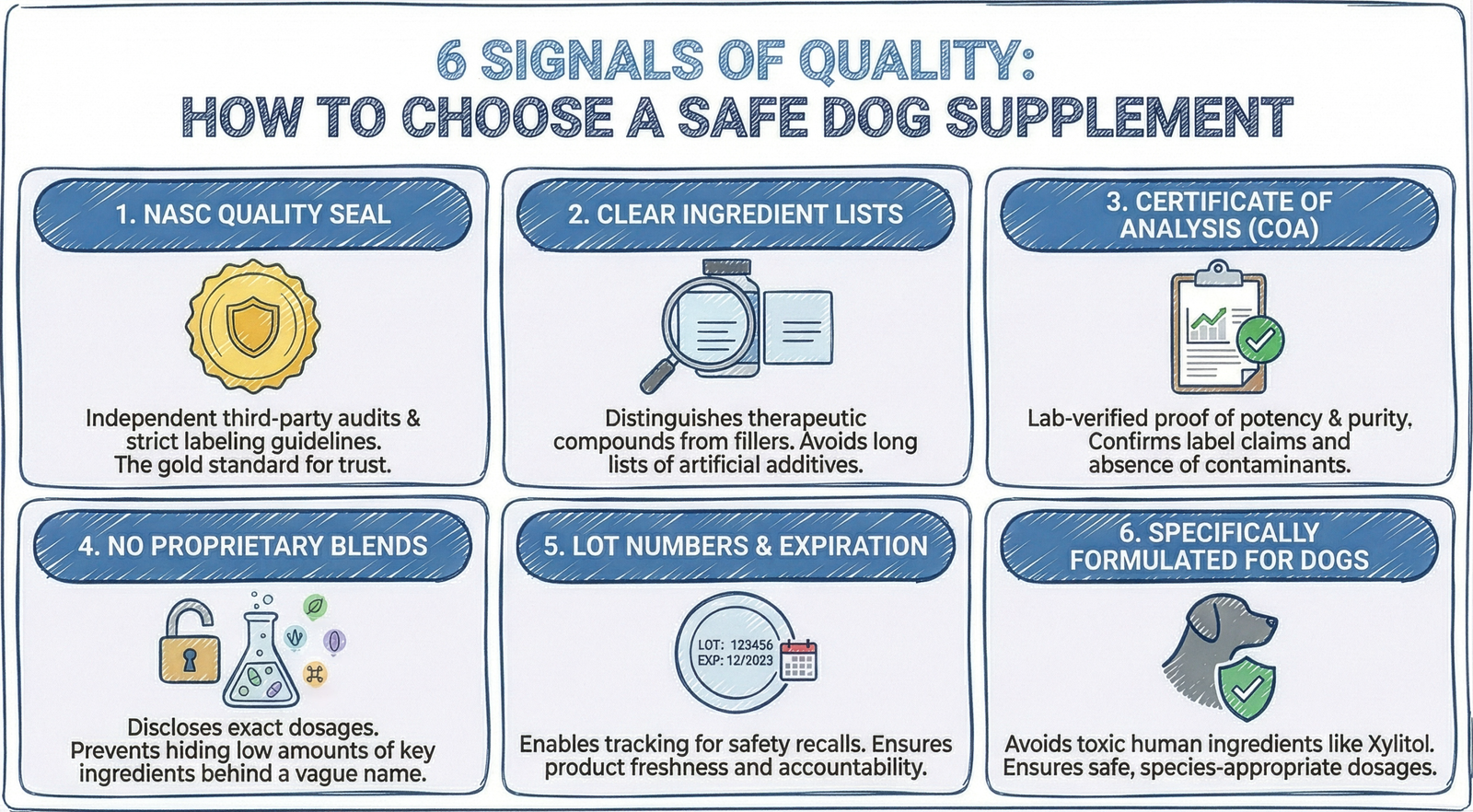
The pet supplement industry is not regulated as strictly as the drug industry. This means some products may not contain what the label claims, and many myths persist about what constitutes a safe product. To protect your dog, look for these six quality signals:
- The NASC Quality Seal: Look for the yellow and gold seal from the National Animal Supplement Council (NASC) on the bottle. Companies displaying this seal must pass comprehensive third-party audits, maintain adverse event reporting systems, and adhere to strict labeling guidelines [11]. It is the gold standard for trust.
- Active vs. Inactive Ingredients: Flip the bottle over. Learning how to read dog supplement labels starts here. “Active Ingredients” are the therapeutic compounds (like Glucosamine). “Inactive Ingredients” are fillers, binders, or flavorings. A high-quality supplement will have a short list of inactive ingredients. If the list is full of sugars or artificial colors, put it back.
- Certificate of Analysis (COA): Top-tier brands will provide a COA upon request. This document proves that a third-party lab tested the batch and confirmed it contains exactly what the label says, without contaminants like heavy metals.
- Proprietary Blends: Be wary of labels that list a “Proprietary Blend” without disclosing the exact milligram amount of each ingredient. This allows companies to hide low doses of expensive ingredients behind a fancy name. Always look for full transparency.
- Specific Lot Numbers: Reputable manufacturers will always print a Lot Number and Expiration Date on the package. This allows them to track ingredients if there is ever a safety recall. If a bottle lacks this information, do not buy it.
- “Made for Dogs”: Human supplements should not be used unless explicitly recommended by a veterinarian. Human products often contain Xylitol (a sweetener toxic to dogs) or dosages of iron that can be fatal to small pets.
Key Takeaways
Supplements can be a powerful tool for your dog’s health, but they are not a replacement for a good diet. The smartest approach is to target specific problems, like stiffness or anxiety, rather than giving a multivitamin just because.
Research shows that success lies in the details: using the right form of glucosamine, choosing probiotics with proven strains, and ensuring your product has passed third-party testing. Consultation with a veterinarian is recommended before adding anything new to your dog’s bowl, especially if they are already on medication.
- Diet First: Supplements are meant to complement a diet, not fix a bad one. Most healthy dogs on quality food do not need a daily multivitamin.
- Target Specific Needs: The best results come from addressing specific issues like joint stiffness, anxiety, or dry skin rather than using a generic “all-in-one” pill.
- Patience is Key: Unlike prescription drugs, supplements take time to work. Allow 4 to 6 weeks for joint supplements and up to 12 weeks for skin supplements to show results.
- Consult Your Vet: Vet advice for dog supplements is indispensable, always check with your professional before starting a new supplement, especially if your dog is on medication.
Sources
- Sanderson, S. L. (2023). Nutritional Requirements and Related Diseases of Small Animals. Merck Veterinary Manual. https://www.merckvetmanual.com/management-and-nutrition/nutrition-small-animals
- WSAVA Global Nutrition Committee. (2021). Guidelines on Selecting Pet Foods and Dietary Supplements. World Small Animal Veterinary Association. https://wsava.org/global-guidelines/global-nutrition-guidelines/
- AAFCO. (2024). The Business of Pet Food: What is a “Complete and Balanced” Pet Food? Association of American Feed Control Officials. https://www.aafco.org/consumers/understanding-pet-food/
- Linder, D. E. (2017). Navigating the supplement aisle: Advice for pet owners. Clinical Nutrition Service, Cummings School of Veterinary Medicine. https://vetnutrition.tufts.edu/2017/01/navigating-the-supplement-aisle/
- Vandeweerd, J. M., et al. (2012). Systematic review of efficacy of nutraceuticals to alleviate clinical signs of osteoarthritis. Research in Veterinary Science, 93(2). https://doi.org/10.1016/j.rvsc.2011.08.010
- Freeman, L. M., et al. (2013). Nutritional risks of homemade diets for dogs and cats. Journal of the American Veterinary Medical Association, 243(9). https://doi.org/10.2460/javma.243.9.1172
- Bauer, J. E. (2011). Therapeutic use of fish oils in companion animals. Journal of the American Veterinary Medical Association, 239(11). https://doi.org/10.2460/javma.239.11.1441
- Schmitz, S., & Suchodolski, J. (2016). Understanding the canine intestinal microbiota and its modification by pro-, pre- and synbiotics. Veterinary Clinics of North America: Small Animal Practice, 46(1). https://doi.org/10.1016/j.cvsm.2015.07.002
- Michelazzi, M., et al. (2010). Effectiveness of L-theanine on storm sensitivity in dogs. Journal of Veterinary Behavior, 5(1). https://doi.org/10.1016/j.jveb.2009.05.001
- National Research Council. (2006). Nutrient Requirements of Dogs and Cats. National Academies Press. https://nap.nationalacademies.org/catalog/10668/nutrient-requirements-of-dogs-and-cats
- NASC. (n.d.). NASC Quality Seal & Program Requirements. National Animal Supplement Council. https://nasc.cc/nasc-seal/
- Weese, J. S., & Martin, H. (2011). Assessment of commercial probiotic bacterial contents and label accuracy. Canadian Veterinary Journal, 52(4). https://www.ncbi.nlm.nih.gov/pmc/articles/PMC3058646/
- Olivry, T., et al. (2015). Treatment of canine atopic dermatitis: 2015 updated guidelines from the International Committee on Allergic Diseases of Animals (ICADA). BMC Veterinary Research, 11. https://doi.org/10.1186/s12917-015-0514-6
- Chou, H. I., et al. (2016). Effects of cranberry extract on prevention of urinary tract infection in dogs. American Journal of Veterinary Research, 77(4). https://doi.org/10.2460/ajvr.77.4.421
- Gavin, P. R., et al. (2018). Clinical efficacy of a powder containing Ascophyllum nodosum for the control of plaque and tartar. Journal of Veterinary Dentistry, 35(4). https://doi.org/10.1177/0898756418808655
- VOHC. (2024). Protocols and Accepted Products. Veterinary Oral Health Council. http://www.vohc.org/accepted_products_dogs.html
- McGrath, S., et al. (2019). Randomized blinded controlled clinical trial to assess the effect of oral cannabidiol administration. Journal of the American Veterinary Medical Association, 254(11). https://doi.org/10.2460/javma.254.11.1301
- FDA. (2022). Vitamin D Toxicity in Dogs. U.S. Food and Drug Administration. https://www.fda.gov/animal-veterinary/animal-health-literacy/vitamin-d-toxicity-dogs